
How ordinary people ended a division, and what it still teaches us.
On 9 November 1989, a confusing press conference and thousands of fearless people ended 28 years of division in Berlin, and they did it without a war. Within 15 years, a continent once split by an iron curtain was largely a community of democracies. What happened that night, why it mattered, and what it still teaches us about courage and patience?
Some moments remind us that history is not only written by the powerful. On a November night in 1989, ordinary people walked through a wall that had divided a city for 28 years, and the world became freer, safer and more connected as a result.
This short edition tells that story in six steps: why the Wall existed, how it fell, what it did for Europe and the world, the costs that followed, and what any of us can take from it into daily life.
1. A city cut in two
Why the Wall existed
After World War II, Germany and its capital were divided between the Western Allies and the Soviet Union. West Germany became a democracy with an open economy, and East Germany became a one-party state with a controlled economy.
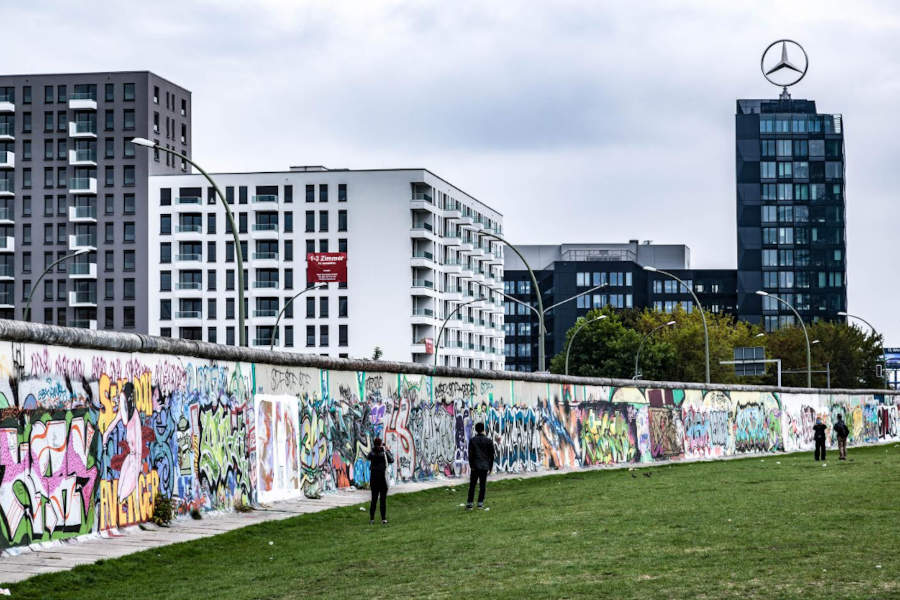
By 1961 about three million East Germans had left for the West, many of them young and skilled. On 13 August 1961 the East German government began building a wall to stop them. It grew into concrete, barbed wire and guarded strips, and at least 140 people died at it.
The Wall became the Cold War’s most visible symbol: a state that had to build a barrier to keep its own people in.
2. The night everything changed
How the Wall fell
The Wall fell because pressure built from below while the Soviet Union, under Mikhail Gorbachev, chose not to use force.
In 1989 Poland held partly free elections, and Hungary opened its border with Austria, giving thousands of East Germans a route west. In Leipzig, peaceful Monday gatherings grew to tens of thousands, and the feared crackdown never came.
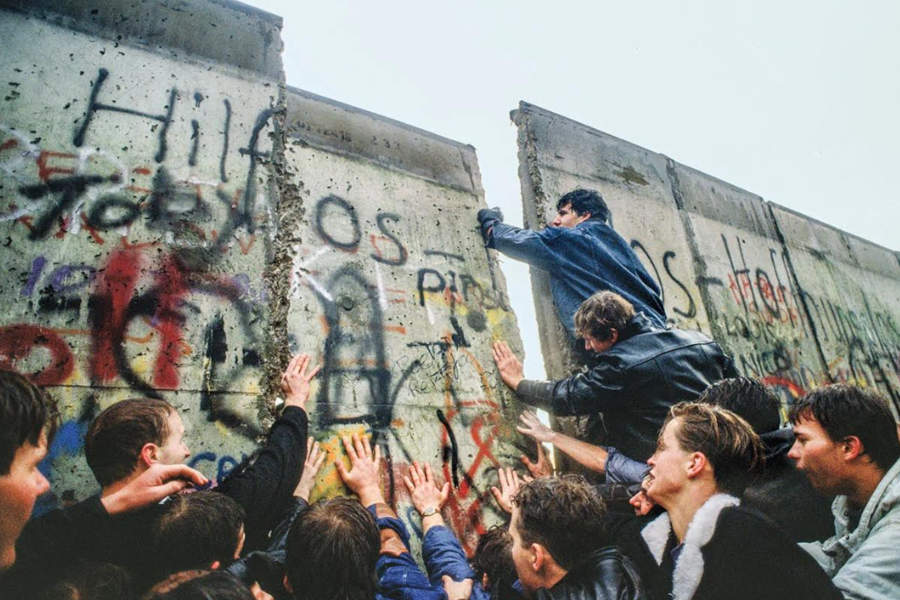
On the evening of 9 November, an East German official announced new travel rules and, asked when they began, said they applied immediately. Crowds went to the border crossings, and overwhelmed guards at Bornholmer Strasse opened the gate. Thousands streamed into West Berlin that night.
No single leader brought down the Wall. Ordinary people, brave neighbours and a few decisions not to shoot did.
3. A new Europe
Reunification, democracy and a wider union
Within 15 years, a continent split by an iron curtain became largely one community of democracies.
- A united Germany. Reunification came on 3 October 1990. A country that had caused two world wars became a stable democracy, accepted by its neighbours.
- Free elections. Poland, Hungary, Czechoslovakia and others replaced one-party rule with free parties, courts and press.
- A wider European Union. Ten countries joined in 2004, most of them former communist states, followed by Bulgaria and Romania in 2007 and Croatia in 2013.
- Security and open borders. Poland, Hungary and the Czech Republic joined NATO in 1999, and passport-free Schengen travel reached many central European countries in 2007.
The lasting gain is a Europe where borders are crossed by trade, students and families instead of tanks.
4. A safer, more connected world
The end of the Cold War
The end of the Cold War lifted a shadow that had hung over the planet for 40 years.
- Less fear of nuclear war. Arms control treaties such as START I (1991) cut the number of deployed nuclear weapons.
- Fewer proxy wars. As US and Soviet rivalry faded, several long wars lost their outside sponsors and ended through negotiation.
- A wave of democracy. The number of democracies grew sharply in the 1990s across Eastern Europe, Africa, Asia and Latin America.
- Open trade and connection. Former closed economies joined world markets, opening opportunities for hundreds of millions of people.
It echoes Amartya Sen’s point that freedom is both the goal of development and a means to it.
5. The honest ledger
Costs and cautions
The story is hopeful, but it was not painless, and it is not finished.
In the 1990s, factories in the former East closed and unemployment surged, leaving many people without work, status or certainty. Regions in the east of Germany and across central Europe have often lagged in income, and resentment over unequal gains has fed political anger and nationalism. Russia’s full-scale invasion of Ukraine in 2022 was a reminder that the freedoms won in 1989 still need defending.
The fall of the Wall opened a far better path, but benefiting from it has required patience, fairness and care for those left behind.
6. Lessons you can use
Courage, patience and peaceful persistence
You do not need power to help change things, only courage, patience and persistence.
- Small acts add up. The Leipzig marches began with a few people and grew into change.
- Walls are made by people, so they can be unmade. Many barriers in a family or workplace seem permanent until someone patiently tests them.
- Choose peaceful means. The change lasted because it was won without bloodshed, and neighbours could live together afterwards.
- Be ready when the door opens. The opening came suddenly, and those who had prepared were able to use it.
Care for those who struggle after change. Every big transition leaves some people behind.
A message to modern humans
You live in a time of loud divisions, fast news and walls of a different kind: suspicion, anger and indifference. The people of 1989 had less freedom, less information and far more to fear, and still they chose hope and showed up.
So here is the message across the years. Do not wait for permission to be brave, and do not mistake today’s wall for a permanent one. Speak with reasons, act with peace, keep your neighbour’s dignity in view, and stay ready for the door that opens when you least expect it.
Freedom is not inherited once; it is practised every day. Pass it on better than you found it.
The Berlin Wall fell because ordinary people kept hoping, kept showing up and kept choosing peace. History bends not only through the decisions of the powerful, but through the courage of many people doing the right thing at the right moment.
The next wall to come down may be much closer to home. Which one will you start on?