“When we are no longer able to change a situation, we are challenged to change ourselves.”
1. Life Line: From Vienna to Global Influence
A life shaped by intellectual brilliance, persecution, survival, and a lifelong search for meaning.
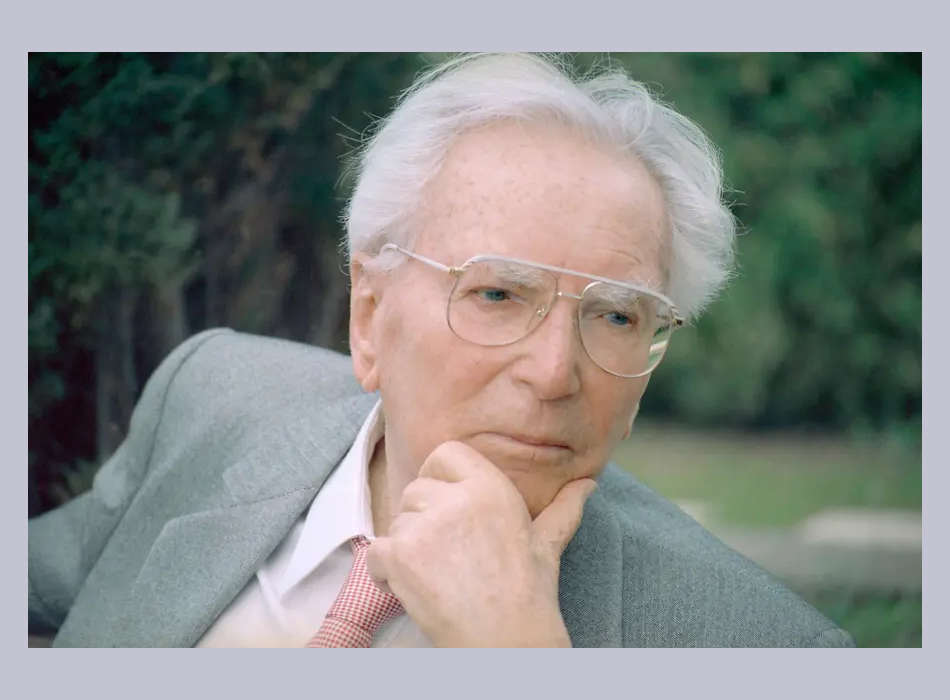
Viktor Emil Frankl was born on 26 March 1905 in Vienna, Austria-Hungary, into a Jewish family. He showed an early interest in psychology and medicine, studying at the University of Vienna, where he earned his medical degree and later a doctorate in philosophy. Before the Second World War, he was already developing a meaning-centred approach to mental health, later known as logotherapy.
After Nazi Germany annexed Austria in 1938, Frankl and his family faced increasing persecution. In 1942, he was deported to Nazi concentration camps, including Auschwitz. He endured forced labor, hunger, violence, and the loss of his parents, brother, and wife. His survival became central to his later work: he observed that people who could sustain a sense of purpose—even in extreme suffering—often preserved greater inner strength and dignity.
After liberation in 1945, Frankl returned to Vienna and reconstructed his lost manuscript from notes he had preserved. He became professor of neurology and psychiatry at the University of Vienna and headed the Vienna Neurological Policlinic for 25 years. He wrote more than 30 books, taught internationally, and received many honours. Frankl died of heart failure in Vienna on 2 September 1997, aged 92.
Life at a Glance
- 1905 — Born in Vienna, Austria-Hungary.
- 1920s–1930s — Studies medicine and philosophy at the University of Vienna; begins developing meaning-centred psychotherapy.
- 1942–1945 — Deported to Nazi concentration camps, including Auschwitz; survives the Holocaust.
- 1946 — Publishes Man’s Search for Meaning, combining his camp experiences with logotherapy.
- 1946–1997 — Develops logotherapy internationally; becomes professor of neurology and psychiatry at the University of Vienna.
- 1997 — Dies in Vienna on 2 September, aged 92.
2. Major Works and Contributions
Frankl transformed the question “What do I want from life?” into “What does life ask of me?”
Frankl’s most influential contribution was logotherapy, a form of existential psychotherapy based on the belief that the primary human drive is the search for meaning. Unlike approaches that focus primarily on pleasure, instinct, or power, logotherapy helps people identify purpose through work, love, and the attitude they take toward unavoidable suffering.
- Man’s Search for Meaning (1946) — His best-known book, combining a memoir of concentration-camp survival with an introduction to logotherapy.
- The Will to Meaning (1969) — A clearer explanation of his theory that meaning, rather than pleasure or power, is the central human motivation.
- Doctor and the Soul (1946) — Explores meaning, conscience, suffering, death, and ethical responsibility in medical and psychological care.
- The Unconscious God (1948) — Examines the spiritual and existential dimension of human life.
- Logotherapy and Existential Analysis — A therapeutic approach that helps individuals confront despair, anxiety, emptiness, and loss by discovering personal meaning.
Frankl identified three principal sources of meaning: creative work or achievement; love, relationships, and connection; and the stance a person takes toward unavoidable suffering. He also emphasised “self-transcendence”—the capacity to look beyond oneself toward another person, a cause, or a responsibility.
3. Enduring Principle: Freedom of Attitude
The lasting gift Frankl offered humanity is the belief that people retain a final freedom: the freedom to choose their response.
Frankl’s central principle is that human beings cannot always control their circumstances, but they can choose how they interpret and respond to them. Even in conditions of extreme deprivation, people may retain dignity by acting according to conscience, values, and responsibility. This idea has influenced psychology, leadership, education, trauma recovery, and personal development.
For Frankl, meaning is not something simply discovered like an object. It is often created through responsible action: caring for another person, completing meaningful work, facing loss with courage, or contributing to a community. He argued that a meaningful life is outward-looking rather than self-absorbed; people often find themselves most fully when they devote themselves to something beyond themselves.
- Freedom of attitude: We may not choose our circumstances, but we can choose our response.
- Will to meaning: The deepest motivation is not comfort or success, but purpose.
- Self-transcendence: Meaning grows through love, service, responsibility, and contribution.
- Meaning in suffering: Unavoidable suffering can be faced in a way that preserves dignity and purpose.
- Responsibility: A meaningful life asks not only what one can receive, but what one is called to give.
4. Modern Applicability of His Principles
Frankl’s ideas remain relevant in an age of burnout, digital comparison, uncertainty, and rapid change.
In modern life, Frankl’s principles offer a practical antidote to anxiety and emptiness. Social media, career pressure, and consumer culture often encourage people to measure worth through visibility, wealth, or comparison. Frankl’s approach redirects attention toward values, contribution, and intentional choices.
- Personal resilience: When facing illness, job loss, failure, or grief, focus on the next responsible action rather than only the magnitude of the problem.
- Mental health: Meaning-centred reflection can complement therapy, especially for people experiencing emptiness or loss of direction; it does not replace professional treatment.
- Work and career: Choose work that aligns with values and contribution, not merely status or income.
- Leadership: Lead by purpose, integrity, and service rather than control or self-promotion.
- Education: Encourage young people to develop character, responsibility, and curiosity—not only credentials.
- Technology: Use digital tools intentionally; avoid letting algorithms define identity, attention, or self-worth.
- Community: Build belonging through service, listening, and shared responsibility.
A simple modern application is the “response pause”: before reacting to stress, conflict, or bad news, ask, “What can I control? What response would reflect my values? What small action would make the situation better?” This converts Frankl’s philosophy into an everyday discipline.
5. Weaknesses, Contradictions, and Unintended Consequences
Frankl’s legacy is powerful, but it should be applied with humility and balance.
Frankl’s ideas can inspire courage, but they can also be misinterpreted. If “finding meaning in suffering” is presented as a demand, it may unintentionally pressure people to accept conditions that should be changed. Meaning-centred thinking should support justice, care, and practical assistance—not replace them.
- Risk of toxic positivity: Telling someone facing poverty, abuse, discrimination, or illness simply to “find meaning” can shift responsibility onto the victim.
- Potential for prescriptive therapy: Critics have argued that logotherapy can become too direct if a therapist implies there is one correct meaning a client must adopt.
- Limited scientific precision: Concepts such as meaning, responsibility, and self-transcendence are influential but difficult to measure and test with the same precision as some modern therapies.
- Survivorship bias: Frankl’s extraordinary resilience should not create unrealistic expectations that every person must overcome trauma through willpower alone.
The balanced lesson is therefore: seek meaning without denying pain; take responsibility without blaming victims; and pursue inner strength while also working to change unjust conditions.
6. Applying Frankl in Everyday Life
His philosophy becomes valuable when it is practised in ordinary decisions, relationships, and responsibilities.
In personal life, Frankl encourages people to live deliberately. Instead of asking only, “What makes me happy?” one can ask, “What is worth committing to?” This may involve learning a skill, maintaining health, supporting family, creating something useful, or contributing to a community.
- Personal life: Define three core values and review whether daily actions reflect them.
- Relationships: Practise self-transcendence by listening, showing patience, and considering the needs of others.
- Conflict: Pause before reacting; choose a response that preserves dignity and seeks understanding.
- Financial decisions: Treat money as a tool for security, responsibility, generosity, and long-term purpose—not as a measure of personal worth.
- Public service: Serve with humility, listen to those affected, protect dignity, and pair compassion with practical reform.
- Adversity: Separate what cannot be changed from what can be changed; act responsibly on the latter.
In financial life, Frankl’s principles suggest that money should serve meaning rather than dominate it. A person can build an emergency fund, avoid destructive debt, invest for long-term goals, and use resources to protect family, support education, and contribute to causes aligned with their values. The question is not merely “How much can I acquire?” but “What kind of life and contribution should my resources enable?”
Viktor Frankl’s life demonstrates that meaning can survive even in the darkest circumstances. His enduring message is that every person has the capacity to choose values, serve others, and act responsibly. In personal life, relationships, financial decisions, and public service, his principles invite us to move from self-centred concern toward purposeful contribution—while remembering that compassion and structural justice must accompany individual resilience.
Frankl’s legacy is not that suffering is desirable, but that human beings can respond to it with freedom, responsibility, and purpose.
Lessons On Essence